
Addressing Some Common Misconceptions About Traffic Law and Road Usage
Traffic law, often perceived as a convoluted set of rules designed primarily for “drivers” and “motor vehicles”, is actually fundamentally about ensuring safety and order on public roadways by encouraging cooperation and conflict mitigation for a variety of road users. Furthermore, misconceptions about who is allowed to use these roads and how they should be used are widespread.
What are some of these common misconceptions? They include some basic principles of traffic law that warrant explanation or clarification as well as clarification on who “should be allowed” use of the roads.
Misconceptions About Traffic Law
If there’s ever an actual example of the concept of “motonormativity,” perhaps such would be that one of the most pervasive misconceptions is that traffic laws are designed exclusively for motor vehicles and that roads are inherently designed and intended for the exclusive use by motor vehicles. These are myths.
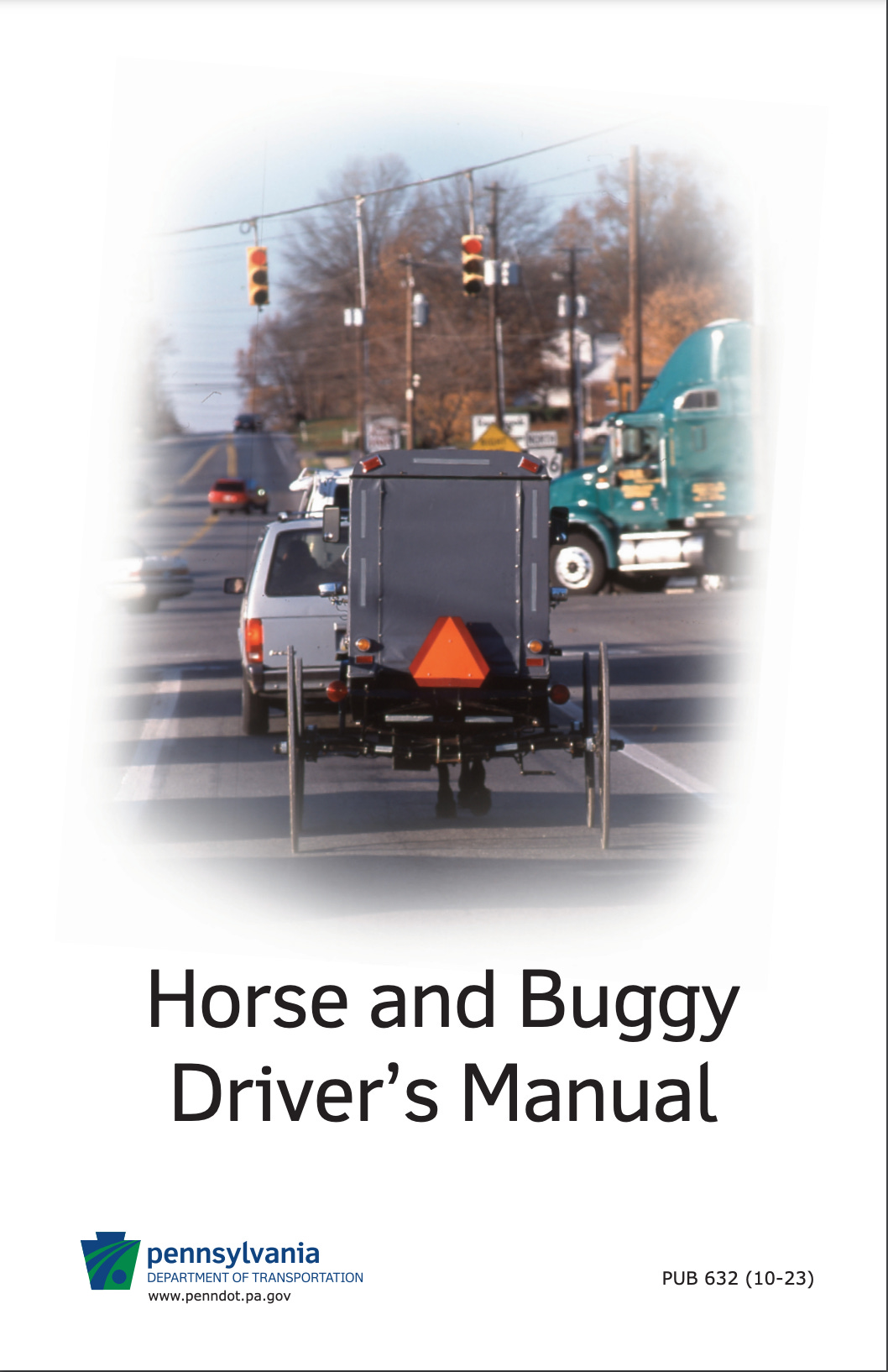
Ironically these are misconceptions pushed by so-called "bicycling advocates, both of the Platitude-Driven flavor and the extremist Cluster B(ike) flavor who center their ideology around restricting and demonizing both the majority of the roads users (motorists) but also law-abiding, principled, bicycle drivers. It’s always us principled bicycle drivers who have to clean up the mess of these other “bicycle advocates.”
These beliefs ignore the fact that traffic laws were established long before motor vehicles became the dominant form of transportation. A great source for debunking this common misconception is Karen Karabell's presentation, "My Bike? Or My 2-Ton Land Missile?" where Karabell dives into the history of the rules of the road.
The ruleset was created by William Phelps Eno, known as the father of traffic safety, and the many of the traffic rules we take for granted today, such as stop signs and one-way streets, were developed by him in an era when motor vehicles were a rarity. Eno ironically originally wrote his rules for New York City back when animal-driven buggies and bicyclists the latter at the time were pejoratively called “scorchers,” for their scofflaw and unpredictable behavior.
Eno took several basic principles about the rules of movement for two primary classes of road users: drivers of vehicles, and pedestrians.
For drivers of vehicles, these basic principles more or less went as so:
Yield to existing traffic using the space you wish to enter, whether that be in front or on a road or lane you’re about to enter. Also known as “first come, first served.”)
Drive on the right side of the road (unless passing another road users, preparing to turn left, or avoiding a hazard)
Slower traffic keep right, faster traffic overtake on the left.
Don’t drive faster than is safe for conditions.
Turn left from the center of the road.
Turn right from the far right portion of the roadway.
The late John Forester, who let’s just say if often grossly misrepresented among dishonest “bicycling advocates” condensed these rules down into two main sets: “speed positioning,” where one places themselves in between intersections, and “destination positioning,” where one drives when approaching and entering an intersection and wishes to change direction.
It was later via bodies such as the National Committee on Uniform Traffic Laws and Ordinances (NCUTLO) and State Lawmaking bodies that these principles were codified into actual legalese-laden statutes.
As Bob Shanteau’s, "The Marginalization of Bicyclists," points out, the misconceptions about legal and safest practices for bicyclists began to decay starting by the early 20th century when lane lines were introduced, then later bicycles lost their status as vehicles yet bicyclists retained the status as drivers of vehicles, and later when bicyclists were subject to “far to right”/”far to the right as practicable” (FTR/FRAP), mandatory side path (MSP), and mandatory bicycle lane laws (MBL).
Prior to these changes, bicycle drivers were typically treated as slow moving vehicle drivers who were require to follow the standard rules for slower moving drivers. But these laws imposed at a minimum, a redundant set of laws but were also discriminatory. Multiple generations with people learning this alternative ruleset led to the common notion that bicyclists exist in a grey zone between drivers of vehicles and “rolling pedestrians,” and subsequently generations of bicyclists believed this was their place on the road. Sometime between then, the term “driver” became used almost exclusively for drivers of motor vehicles even though the term applied to bicyclists and other non-motorized vehicle operators.
Another misconception is that cyclists are not legitimate road users and should not be allowed to use the roads. This belief often leads to the dangerous assumption that cyclists are a nuisance rather than equal participants in traffic but also fundamentally misunderstands one’s right to travel by a conveyance recognized as a legal road vehicle. Much of this has to do with the misconceptions mentioned previously, and people who make the argument never seem to stop and think whether a walker or runner also needs to “pay their way” somehow to use the sidewalks and crosswalks.
Non-driver behavior, such as edge behavior and pedestrian-on-wheels behavior (both common in bicycle lanes, “protected” bicycle lanes, path and sidewalk cycling) makes their movements far less predictable to other drivers, often setting each user up for confusion and in the worst case, collisions. When a substantial portion of both groups have a poor understanding of the actual principles of movement of vehicles at a minimum misunderstandings will occur and in other cases outright conflict will occur.
Well-written, fair and equitable (not in the woke sense) traffic laws are not arbitrary; they are the result of over a century of experience and traffic engineering principles. The primary goal of these laws is to minimize collisions and facilitate the smooth flow of traffic. Repealing laws that discriminate against bicyclists should be a top priority for cycling advocacy groups, but unfortunately virtually all of them have fallen to ideological capture and Wokism.
Misconceptions About Who Can Use The Roads
There are also many misconceptions on who is allowed to use the roads. With few exceptions, bicyclists are allowed on every public road (exceptions should be challenged in courts) which provides access to private property and are typically not permitted on limited access roads designed exclusively for high speed motor traffic. These roads do not directly access private property and in most areas provide redundant service.
Then there are misconceptions how access is granted.
Non-bicyclists complain that bicyclists do not pay road taxes, have driving licenses, or registration and insurance policies. The public roadway network is a public good, that does not require one to “pay into the system,” but in practicality, many bicyclists, who are also motorists paying fuel taxes and registration fees also pay sales, property taxes, and even purchase bonds to pay for roads. Licensing, registration, and insurance policies applies to drivers of motor vehicles only because of the age-restrictions to operate such an expensive piece of movable property in the first place plus their operation pose far greater risk to lives and property if operated improperly. (This, of course, does not excuse bicyclists from operating incompetently or unlawfully.) Bicyclists who however push for “protected” bicycle lanes, road diets, and other drastic reconfigurations where general use traffic lanes (there is no such thing as a “car lane”) are reconfigured or removed specifically for the use of bicycle travel face backlash in part due to the extra cost of such projects which are often paid for by State or Federal grants, or a redistribution of road user fees paid by everybody else.
There’s also the accusation, often due to the presence of bicyclists riding sport bicycles, many on weekends, and wearing lycra suits (the Lance Armstrong comment got old about 20 years ago by the way) should not be permitted use of the public roads because the trips of other people, say going to work take priority over people appearing to be using the roads “for pleasure.” While a certain event in the last four years brought out a certain, authoritarian crowd, so long as the users are obeying the rules of the road, there is no valid reason to demand their trip be deemed “non-essential.” People asking such questions or already making such demands should exercise caution, see Heather Heying ‘s piece below.

In Closing
Promoting the understanding that cyclists are equal participants in traffic is essential. As Karen Karabell pointed out in her presentation, people will choose to bicycle more when they feel expected and respected as normal parts of traffic. On top of what should be a common sense civics lesson on fundamental right to travel and use of public goods, educating both motorists and cyclists on the shared nature of road use and the need for cooperation can reduce conflicts and improve safety for all road users. Contrary to hysteria from certain anti-social factions of cycling advocacy, motorists can be highly cooperative with bicyclists if treated with respect and given the chance to reciprocate.
In conclusion, traffic laws are a comprehensive system designed to ensure the safety and efficiency of all road users and both motorized and non-motorized vehicles are permitted to use the public roadway network with few exceptions. Misconceptions about these laws can lead to dangerous behaviors and attitudes. By understanding and adhering to the principles of traffic law, both motorists and cyclists can contribute to a safer and more cooperative road environment. The rules of the road are not just for people in motor vehicles but for everyone who uses public roadways, emphasizing the importance of cooperation and conflict mitigation in achieving safe travel for all.